

Tens of thousands of emergency calls made unnecessarily but system has potential to make motorways, in particular, much safer
Two thirds of the emergency calls made from cars and vans by the eCall safety system are false alarms, new research suggests.
All new cars and vans type-approved for sale in the UK after April 2018 must be fitted with eCall, a safety system designed to accelerate emergency responses to road crashes.
It is estimated that nearly a third of cars and vans in the country already have the technology installed.
In the event of a serious crash the system is triggered (often by the deployment of a vehicle’s airbags), automatically making a 999 call and sending a standardised set of data to emergency call responders, including vehicle type and location.
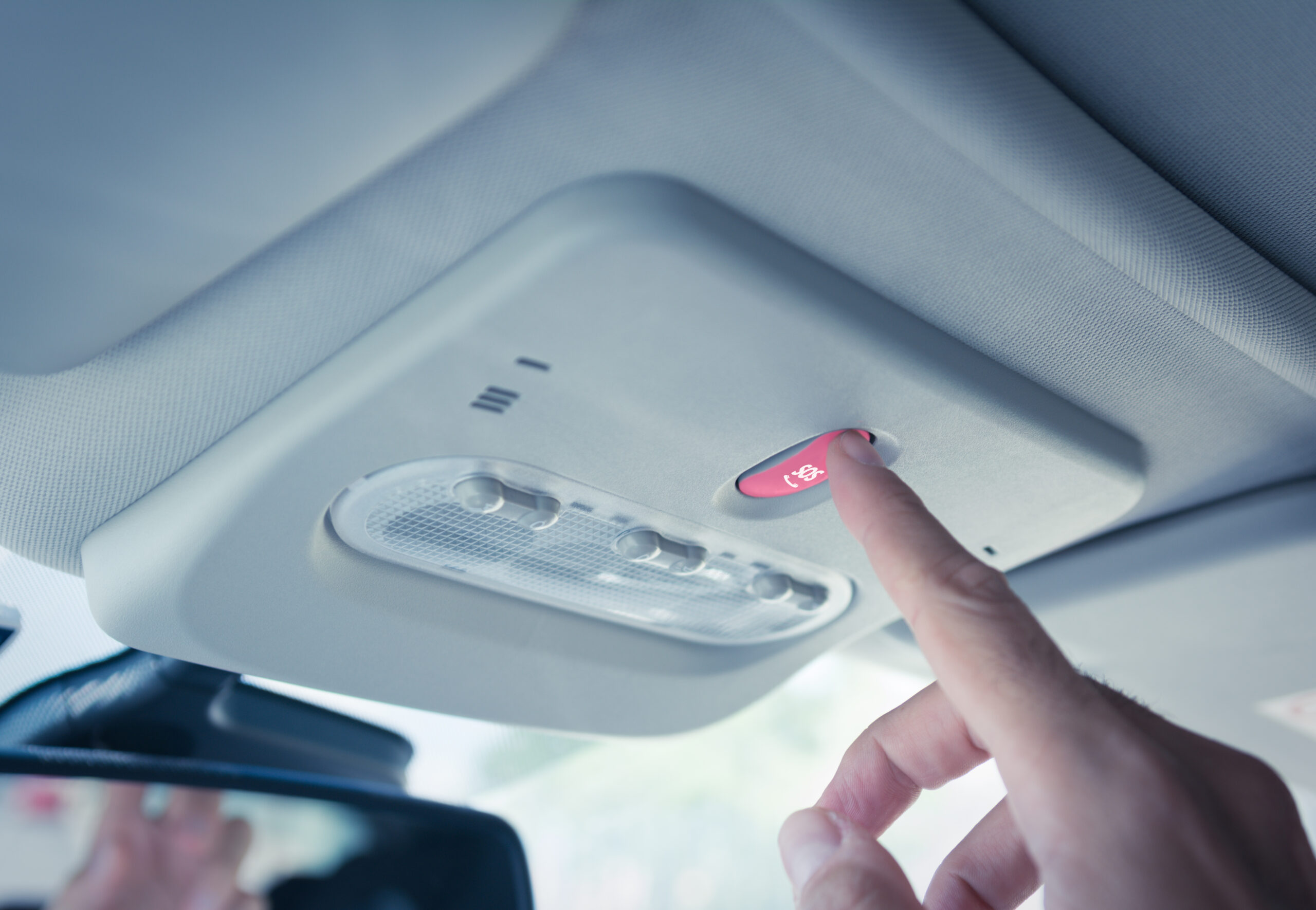
The eCall alert process can also be triggered manually by a vehicle occupant using a button, often labelled ‘SOS’.
Since 2018, at least 350,000 calls have been initiated in the UK.
Statistics for 2024 indicate that more than 85% of eCall alerts made in that year were triggered manually. Of those about three quarters of them proved to be false alarms.
For automatic activations in the same year, around a third were considered to be false alarms.
This means approximately two thirds of all calls in 2024 were false alarms.
If this pattern has been the same since 2018 then some 230,000 of the 350,000 calls made to date will have been false alarms.
The figures are revealed in a report – Spoiler Alert: Is the eCall emergency alerting system fulfilling its road safety promise? – by Dr Nick Reed, of Reed Mobility, for the RAC Foundation.
The author says that common causes of manual false alarms include “button misuse, poor interface design, system faults and demonstration presses at dealerships.”
Even where calls are genuine the report concludes that not enough information is systematically reaching the emergency services, including the vehicle characteristics contained in the standardised set of data that is sent to the emergency call handling centre whether eCall is activated manually or automatically.
The author also believes that more of the information provided by eCall should be passed on not just to the police, ambulance, and fire and rescue services, but also to the organisations responsible for running the major road networks (National Highways in England, for example) so they can manage traffic better and alert other road users to dangers in front of them.
The report warns that even if the false alarms can be reduced and the data is used more effectively, the owners of up to four million cars and vans fitted with early versions of eCall could find themselves with systems that don’t work because they rely on 2G and 3G mobile phone networks which are progressively being turned off.
Steve Gooding, director of the RAC Foundation, said:
“eCall is a great idea. Initially conceived as a system that would automatically raise the alarm after a crash where drivers and passengers can’t do it themselves, it can be particularly useful in remote areas where no other road users are on hand to dial 999.
“However, this report reveals a number of shortcomings in the system that need sorting, not least in the processes through which data is handled and the system’s historical reliance on old mobile phone networks that are being turned off. This requires urgent attention otherwise lives could be at risk from life-saving technology failing when it’s needed most.
“The number of manually triggered false alarms also suggests the need for action to explain what is clearly still an unfamiliar system for many drivers.
“One huge potential benefit is the use of eCall alongside, or instead of, stopped vehicle detection apparatus on the motorway network. There is understandable public and political concern about the dangers of vehicles breaking down in the live lanes of motorways, especially those sections that are all-lane running. eCall could help reduce those dangers by providing network managers with the swift, accurate notification that could save a bad situation turning into a catastrophe.”
Dr Nick Reed, the report author, said:
“With the estimated potential to reduce road deaths by 5%, the case for accelerating the emergency response to road crashes through the eCall alert system is clear.
“While the system has been successfully fitted to all new cars and light goods vehicles type-approved since April 2018, the report highlights that its effectiveness is being undermined by challenges in exploiting the data it provides and by a high rate of false alerts, often triggered by accidental misuse.
“As an ever-increasing proportion of vehicles are equipped with eCall and similar functionalities become available via smartphones, smartwatches and dashcams, it is essential that we assess the true value of these technologies and ensure we unlock their full, life-saving potential.”
When eCall is activated the call is put through either to the normal 999 call centre (currently operated by BT) or to a third-party call handler which will triage the call and decide whether it should be put through to the 999 call centre.
The report suggests a number of high-profile incidents where eCall, had it been available, is likely to have made a significant difference. These include:
1. Selby train crash – February 2001 – ten people died after a Land Rover crashed onto a high-speed railway line and a train collided with it, before a second train hit the first.
2. Sheppey Crossing crash – September 2013 – 130 vehicles collided in fog resulting in 68 people being injured
3. Cardiff – March 2023 – three car occupants died and two were seriously hurt after a car left the road, crashed into trees and wasn’t discovered until 46 hours later
4. Llanfrothen – November 2023 – four young adult males were killed after a car crashed and ended up in a ditch. The car wasn’t found for two days
The study also notes that other emergency alerting systems are now becoming commonplace including Google Car Crash Detection and Apple Crash Detection.
ENDS
Contact:
Philip Gomm – Head of External Communications – RAC Foundation
[email protected] | 07711 776448
Notes to editors:
The RAC Foundation is a transport policy and research organisation which explores the economic, mobility, safety and environmental issues relating to roads and their users.
The Foundation publishes independent and authoritative research with which it promotes informed debate and advocates policy in the interest of the responsible motorist. For more information visit www.racfoundation.org