

The shift to electric vehicles (EVs) is accelerating, and while that is good news for carbon and air quality goals, it creates a major fiscal problem: fuel duty income to the Treasury is dwindling. In the UK, this revenue has long been a quiet workhorse of public finances. As the proportion of the vehicle fleet that is electric continues to grow, the exchequer revenue gap becomes impossible to ignore. Something has to replace the lost fuel duty.
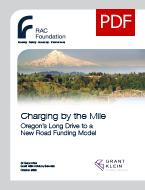
Distance‑based charging is emerging as the most logical answer ‑ fair, transparent and aligns what drivers pay with the use they make of the network. But designing a system that is trusted, affordable and politically achievable is far from straightforward. That’s why the experience of the U.S. state of Oregon is so valuable as Dr Grant Klein explains in his report for the RAC Foundation.
Oregon Department of Transportation (DOT) has spent more than two decades working through the practical and political realities of moving from fuel tax to a per‑mile charge. What began as a response to improving fuel efficiency has evolved into one of the world’s most advanced road usage charging programmes.
The state has run multiple pilots and tested different technologies and business models through what became known as the OReGO programme. It has listened to public concerns and adapted its design along the way. The result is a clear, workable model that will become mandatory for EVs in the state from 2027, and then for hybrids from 2028.
Three lessons stand out:
1. Clarity of purpose matters. Given the direct link between fuel tax and the maintenance of the road network, Oregon’s legislature was able to keep its message simple: fuel tax is no longer enough to maintain roads and bridges. Hence, the purpose of the road user charge is to ‘replace’ the fuel tax.
2. Public concerns must shape the design. Privacy worries led to non‑GPS (global positioning system) options and the use of private sector account managers as intermediaries. Fairness concerns prompted detailed analysis of rural and urban driving patterns so the debate could be well‑informed.
3. Modularity and choice make the system more resilient. For the mandatory scheme being finalised currently, Oregon DOT will allow multiple reporting methods, multiple account managers interacting with customers and a phased transition, which keeps costs down and gives drivers options.
Dr Grant Klein is a transport strategist and technologist with more than 30 years’ experience working across the UK, Europe and North America. He has held senior advisory positions in both the private and public sectors. He set the technology strategy for National Express’s bus, coach and rail businesses, and advised the UK Department for Transport on road pricing as chief technical architect, giving him first-hand experience of the interplay across the policy, technical and behavioural challenges of distance‑based charging. He helped build and then led PwC’s UK transport practice, launching its global transport network. In 2025, he founded Grant Klein Advisory Services to focus on projects that make transport work better for people and places.